US-China Tariff Cuts: $60 Billion in Goods Could Get Lower Duties
The United States and China have taken another step toward easing trade tensions by agreeing to pursue tariff reductions covering around $60 billion worth of goods traded between the two countries.
Under the proposal announced on September 28, 2026, each country has recommended approximately $30 billion worth of non-sensitive imports from the other side for more favorable tariff treatment. The products range from U.S. agricultural goods and medical equipment to Chinese toys and household appliances.
However, important details are still unresolved. Neither government has specified exactly how large the tariff reductions will be or when the lower rates will take effect.
The latest US China tariff cuts initiative is part of a wider effort to stabilize economic relations between the world’s two largest economies.
What Did the United States and China Agree To?
The latest agreement involves approximately $60 billion worth of imports.
The United States and China have each identified about $30 billion in products that could receive reduced tariffs.
According to U.S. Trade Representative Jamieson Greer, the American side says the arrangement could improve access to the Chinese market for roughly 30% of U.S. exports to China.
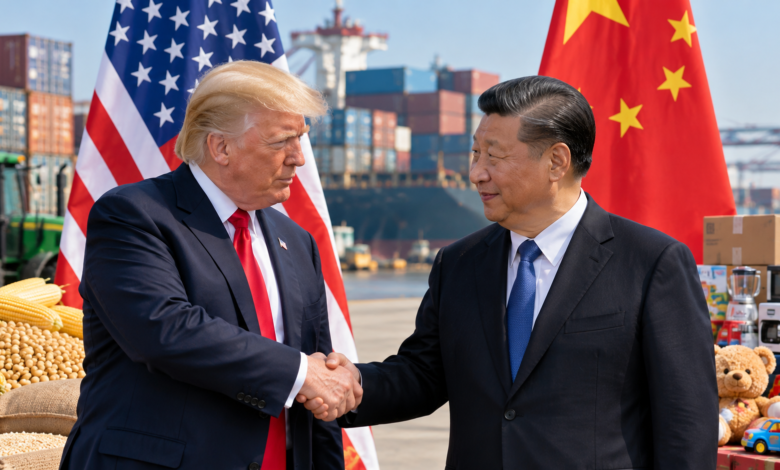
The agreement emerged following the latest summit between U.S. President Donald Trump and Chinese President Xi Jinping in Washington.
The two countries also agreed to extend their existing trade truce for another two months, giving negotiators additional time to work on unresolved economic issues.
The extended truce is expected to continue through January 10, 2027.
Which U.S. Products Could Receive Lower Chinese Tariffs?
American agricultural producers are among the sectors that could benefit from the proposed tariff reductions.
Products included in China’s tariff-relief list reportedly include:
- Corn
- Wheat
- Meat
- Dairy products
- Sorghum
- Vegetable oils
- Seafood
- Timber
- Cosmetics
- Medical devices
The measures could make some American products more competitive in the Chinese market by reducing the additional costs created by tariffs.
Agriculture has traditionally been one of the most sensitive areas in U.S.-China trade negotiations because China is an important export market for American farmers.
Soybeans Are Not Included
One significant omission from the tariff-reduction package is U.S. soybeans.
Soybeans have historically been one of the largest U.S. agricultural exports to China, making their absence important for farmers and commodity traders.
The proposed list includes soybean-related products such as soybean oil and soybean meal, but not soybeans themselves.
That means major questions surrounding soybean trade between the two countries remain unresolved.
The omission also demonstrates that the latest agreement is limited rather than a comprehensive settlement of all U.S.-China trade disputes.
Which Chinese Goods Could Receive Lower U.S. Tariffs?
American consumers and importers could also see lower tariffs on selected Chinese goods.
Products identified for potentially more favorable U.S. tariff treatment include:
- Toys
- Small household appliances
- Tableware
- Children’s products
- Household goods
- Holiday decorations
These are primarily consumer products rather than strategically sensitive technologies.
If the tariff reductions are implemented, U.S. importers would pay lower duties on covered products.
Whether those savings would eventually result in lower retail prices would depend on factors including shipping costs, currency movements, retailer pricing decisions and broader supply-chain expenses.
Could Tariff Cuts Reduce Prices for U.S. Consumers?
Tariffs are taxes charged on imported products.
When an American company imports goods from China, it generally pays the applicable tariff to the U.S. government.
Companies can respond to tariffs in several ways.
They may absorb the additional cost, negotiate lower prices from suppliers or pass some of the expense to customers.
Reducing tariffs can therefore lower costs for importers, although it does not automatically guarantee that retail prices will fall by the same amount.
For products such as small appliances, toys and household goods, lower tariffs could reduce some of the cost pressure facing American importers.
Why Are the US China Tariff Cuts Important?
Trade between the United States and China affects businesses, consumers, farmers and manufacturers around the world.
Years of tariffs and trade restrictions have encouraged companies to reconsider supply chains and diversify production.
Targeted tariff reductions could provide some relief.
For U.S. exporters, easier access to China’s enormous consumer market could create additional sales opportunities.
For Chinese exporters, lower American tariffs could improve competitiveness in the U.S. market.
However, the proposed $60 billion package represents only a portion of the enormous volume of trade between the two countries.
Many existing tariffs and restrictions will remain in place.
Trade Truce Extended for Two More Months
Another important part of the latest negotiations is the extension of the U.S.-China trade truce.
Earlier agreements had temporarily prevented another major escalation in tariffs.
The latest extension gives negotiators more time to work toward a broader agreement rather than immediately introducing new trade restrictions.
For businesses, even temporary stability can be useful.
Companies involved in international trade often make purchasing, manufacturing and shipping decisions months in advance.
Sudden changes in tariffs can make those decisions more difficult.
A longer negotiating period could therefore provide businesses on both sides with greater short-term certainty.
No Exact Tariff Rates Have Been Announced Yet
Despite headlines about tariff reductions, one major issue remains unresolved.
Neither Washington nor Beijing has publicly specified exactly how much tariffs on the selected products will be reduced.
The governments also have not provided a detailed implementation schedule.
That distinction is important.
The agreement currently represents a commitment to pursue more favorable tariff treatment for designated products rather than confirmation that every tariff has already been lowered.
Businesses may therefore need to wait for additional government announcements before changing import or export plans.
Agricultural Trade Remains a Major Issue
American farmers have been particularly affected by changes in relations between Washington and Beijing.
China is an important buyer of several U.S. agricultural commodities.
During periods of trade tension, tariffs can make American agricultural products more expensive compared with supplies from competing countries.
The inclusion of corn, wheat, meat and dairy products in the latest package could provide opportunities for some U.S. producers.
However, the exclusion of soybeans means one of the most important agricultural trade issues remains open.
Further negotiations may therefore continue to focus heavily on farm purchases and market access.
China Also Agrees to Buy U.S. Coal
The trade discussions extend beyond tariff reductions.
China has also agreed to purchase 10 million metric tons of U.S. coal annually in 2027 and 2028, according to reports on the agreement.
Such commitments could provide additional business for U.S. energy producers.
However, actual economic effects will depend on factors such as global coal prices, transportation costs and whether planned purchases are completed.
Financial Services Are Also Part of the Talks
Financial services represent another area where the countries have identified possible cooperation.
China has said it will examine and approve qualified foreign financial institutions, including firms backed by U.S. capital, seeking to expand operations and open branches in China.
For U.S. financial companies, greater access to the Chinese market could provide new growth opportunities.
Financial market access has been discussed in U.S.-China negotiations for many years and remains an important issue for international banks and investment firms.
U.S. and China Plan AI Discussions
Artificial intelligence has also entered the broader economic relationship between the two countries.
Washington and Beijing have agreed to establish a communication channel related to AI incidents and plan further dialogue.
AI has become an increasingly important area of competition between the United States and China.
Both countries are investing heavily in artificial intelligence infrastructure, advanced semiconductors and computing technology.
At the same time, governments are examining how to manage risks associated with rapidly developing AI systems.
The creation of a communication channel suggests the two countries may maintain some cooperation even while competing technologically.
More Direct Flights Could Be Discussed
Another issue under discussion is the number of direct flights between the United States and China.
Both governments have indicated that communication will continue over potentially expanding air connections.
More flights could benefit tourism, business travel and international commerce.
Air travel between the countries has remained an important part of efforts to rebuild economic and people-to-people connections following years of disruption.
What Does the Deal Mean for American Businesses?
Different U.S. industries could experience different effects.
Agricultural producers may gain easier access to Chinese buyers.
Medical-device manufacturers and some consumer-product companies could also benefit from reduced trade barriers.
Meanwhile, American retailers importing Chinese goods could potentially face lower costs on selected products.
However, companies should not assume all tariffs are disappearing.
The agreement covers only designated goods, while many larger trade disputes remain unresolved.
Businesses will also need to wait for details on tariff rates and implementation dates.
Major Trade Disputes Still Remain
The latest tariff proposal does not resolve every economic disagreement between Washington and Beijing.
Major areas of tension still include:
- Semiconductor technology
- Export controls
- Rare-earth minerals
- Agricultural purchases
- Industrial subsidies
- Market access
- Investment restrictions
- Advanced artificial intelligence technology
Both governments continue to compete in strategically important industries.
As a result, targeted tariff relief can occur at the same time that restrictions remain in other areas.
The latest deal should therefore be viewed as a limited easing of trade tensions rather than the end of the wider U.S.-China economic rivalry.
What Happens Next?
Negotiators are expected to continue discussions before the extended trade truce expires.
One important step will be announcing exactly how much tariffs on the selected $60 billion worth of goods will be reduced.
Businesses will also be watching for implementation dates.
Agricultural negotiations could attract particular attention because of the exclusion of soybeans.
Officials may also continue discussing investment, financial services, artificial intelligence and expanded direct flights.
The success of the latest initiative will ultimately depend on whether the proposed measures are implemented and whether both governments can reach agreements on the larger unresolved trade issues.
Final Thoughts
The latest US China tariff cuts proposal represents a limited but significant attempt to reduce some trade barriers between the world’s two largest economies.
Around $60 billion in goods have been identified for potentially more favorable tariff treatment, divided roughly equally between products imported by the United States and China.
American agricultural products such as corn, wheat, meat and dairy are included, while Chinese toys and household products could receive lower U.S. tariffs.
Still, important details remain uncertain.
The size of the tariff reductions and the exact date they will take effect have not yet been announced, while major products such as U.S. soybeans remain outside the current package.
With the trade truce now extended into January 2027, the coming months will show whether these targeted tariff reductions can lead to a broader U.S.-China economic agreement.