US Russia Ukraine Talks 2026: Officials Discuss War and Energy Cooperation
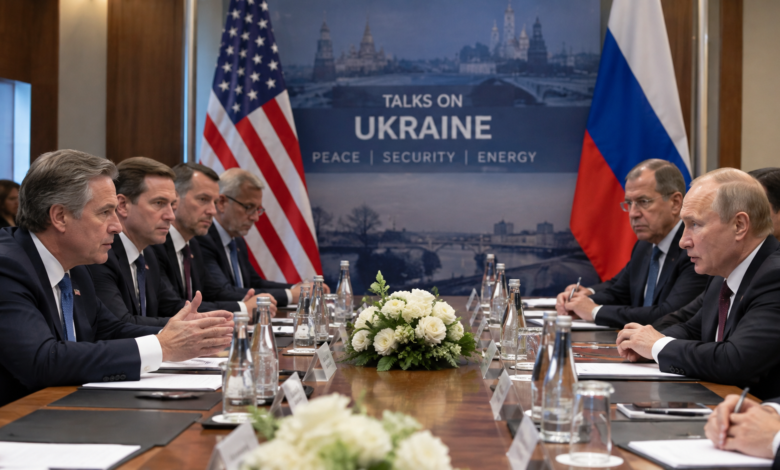
Russian presidential envoy Kirill Dmitriev has held new talks with U.S. officials as Washington and Moscow continue diplomatic contacts over Russia’s war against Ukraine and the possibility of future economic and energy cooperation.
A U.S. official described the discussions as constructive and said they covered efforts to end the war as well as possible U.S.-Russia energy initiatives after the conflict.
Dmitriev, who serves as Russian President Vladimir Putin’s special envoy and heads the Russian Direct Investment Fund, met U.S. officials during a visit to the United States.
The latest US Russia Ukraine talks 2026 come as Washington explores several possible steps to reduce hostilities, including a potential agreement limiting attacks on energy infrastructure.
However, no comprehensive ceasefire or peace agreement has been announced, and major disagreements between Russia and Ukraine remain unresolved.
What Happened in the Latest US-Russia Talks?
Dmitriev held discussions with U.S. officials about the war in Ukraine and possible economic cooperation between Washington and Moscow.
According to a U.S. official cited by Reuters, the talks included possible energy initiatives that could be pursued after the conflict ends.
Dmitriev also met representatives connected with the U.S. Treasury and Energy departments.
The discussions are part of a wider diplomatic effort involving multiple meetings between American, Russian and Ukrainian officials.
The latest contacts do not mean a peace agreement is imminent.
Instead, they indicate that communication channels between Washington and Moscow remain active.
Who Is Kirill Dmitriev?
Kirill Dmitriev is the chief executive of the Russian Direct Investment Fund and a special presidential representative for international economic cooperation.
He has become an important figure in contacts between Moscow and Washington.
His role is particularly relevant because discussions are increasingly connecting diplomacy over Ukraine with possible future economic cooperation.
That includes energy, investment and other commercial relationships that could potentially develop if the war ends and political conditions allow them.
However, sanctions and deep political disagreements remain major obstacles to any significant normalization of economic relations.
Energy Becomes an Important Part of Ukraine Diplomacy
Energy infrastructure has become increasingly important in diplomatic discussions surrounding the war.
Both Russia and Ukraine have targeted energy-related facilities during the conflict.
Russian attacks have damaged Ukrainian electricity and energy infrastructure, while Ukraine has conducted strikes against Russian oil refineries and other energy facilities.
The United States has recently supported discussions around a potential reciprocal halt to some attacks on energy infrastructure.
Such an arrangement would be narrower than a complete ceasefire.
Instead of stopping all military operations, both sides could potentially agree not to attack certain energy facilities.
Ukraine Says It Is Ready for an Energy Ceasefire
Ukrainian President Volodymyr Zelenskyy recently said Ukraine was prepared to consider a mutual halt to attacks on energy infrastructure.
The proposal would require reciprocal action from Russia.
Under the concept discussed publicly, Russia would stop attacking Ukrainian energy infrastructure while Ukraine would stop targeting Russian oil refineries and related facilities.
Ukraine has emphasized that any arrangement would need to apply to both sides.
No final agreement has been announced.
This distinction is important because discussions about a proposal should not be confused with an actual ceasefire.
Why Energy Infrastructure Matters
Energy has become strategically important throughout the war.
Ukraine depends on electricity infrastructure to keep homes, hospitals, factories and public services operating.
Damage to power-generation and transmission facilities can create significant civilian and economic disruption.
Russia, meanwhile, depends heavily on oil and gas exports for government revenue.
Ukrainian attacks on Russian refineries can disrupt fuel production and potentially affect export capacity.
This means energy infrastructure has both military and economic importance.
A successful agreement protecting certain facilities could reduce some economic disruption even if broader fighting continued.
Rising Global Energy Prices Add Pressure
The diplomatic push is also taking place against a difficult global energy backdrop.
Oil prices remain elevated because of geopolitical tensions and supply concerns.
Brent crude was trading above $100 per barrel on September 29, although prices declined during the session as additional Middle Eastern supply reached the market.
Higher energy prices affect consumers and businesses around the world.
They can increase:
- Transportation costs
- Airline expenses
- Manufacturing costs
- Food distribution costs
- Household fuel bills
- Inflation
For governments trying to control consumer prices, stabilizing global energy markets has therefore become an important economic objective.
US and Russia Discuss Possible Postwar Energy Projects
One of the most notable elements of the latest talks is discussion of what could happen after the war.
The U.S. official said possible future U.S.-Russia energy initiatives were among the subjects discussed.
No specific projects or agreements have been publicly confirmed.
Any major energy cooperation would face complicated political and legal questions, particularly because Russia remains subject to extensive Western sanctions.
The significance of the discussions is therefore not that new energy projects are about to begin.
Rather, they show that negotiators are exploring possible incentives and economic relationships that could become relevant in a future settlement.
Sanctions Remain a Major Issue
Western sanctions have transformed Russia’s economic relationships since its full-scale invasion of Ukraine in February 2022.
The United States and European countries imposed restrictions targeting Russian banks, companies, individuals and important sectors of the economy.
Energy has been a particularly important area.
Europe significantly reduced its dependence on Russian pipeline gas, while Western governments introduced measures targeting Russian oil revenue.
Any meaningful return to U.S.-Russia economic cooperation would therefore require difficult decisions about sanctions.
Those decisions would depend heavily on the terms of any future settlement and the policies of the governments involved.
No Peace Deal Has Been Reached
Despite renewed diplomatic activity, there is currently no comprehensive agreement ending the war.
Russia and Ukraine continue to disagree over fundamental issues, including territory and security arrangements.
Military operations also continue.
This means the latest diplomatic meetings should be understood as exploratory discussions rather than evidence that the conflict is close to ending.
Peace negotiations in major wars frequently involve multiple rounds of talks, proposals and failed initiatives before any durable agreement becomes possible.
Trump and Zelenskyy Recently Discussed the War
The latest U.S.-Russia contacts follow a meeting between U.S. President Donald Trump and Ukrainian President Volodymyr Zelenskyy in New York.
Energy infrastructure was among the subjects discussed during recent U.S.-Ukraine diplomacy.
Washington has been exploring ways to reduce hostilities while maintaining separate communication channels with Kyiv and Moscow.
That approach means U.S. officials are speaking with both sides rather than relying exclusively on direct Russia-Ukraine negotiations.
Whether those parallel contacts can produce a mutually acceptable framework remains uncertain.
Witkoff and Kushner Have Also Been Involved
U.S. envoys Steve Witkoff and Jared Kushner have been involved in the latest diplomatic efforts.
They met Dmitriev during his U.S. visit and had previously traveled to Moscow for discussions with Putin.
The contacts demonstrate the multiple diplomatic channels currently being used.
Rather than one formal peace conference, negotiations are developing through a series of meetings involving presidential envoys, government officials and senior political figures.
That approach can allow negotiators to explore proposals privately before governments decide whether to support them publicly.
Black Sea Grain Corridor Also Discussed in Wider Diplomacy
Another issue raised during recent diplomatic efforts has been the possibility of restoring more reliable Black Sea grain transportation.
Ukraine is a major agricultural exporter.
The Black Sea has historically been one of its most important routes for shipping wheat, corn and other agricultural products to international markets.
Disruptions can affect countries far beyond Eastern Europe because Ukrainian agricultural exports contribute to global food supplies.
A more stable grain corridor could therefore provide economic benefits even before a comprehensive peace agreement.
However, as with the proposed energy arrangement, significant political and security obstacles remain.
Why Washington Is Exploring Smaller Agreements
Ending the entire war in one negotiation would require agreement on extremely difficult issues.
A narrower agreement can sometimes be easier to negotiate.
Possible examples include:
- Protecting energy infrastructure
- Facilitating grain exports
- Prisoner exchanges
- Humanitarian arrangements
- Reducing attacks in particular areas
These measures would not end the conflict.
However, supporters of incremental diplomacy argue that smaller agreements can build communication and potentially create conditions for broader negotiations.
Critics may argue that limited arrangements could fail to address the fundamental causes of the conflict.
Whether incremental diplomacy succeeds depends largely on implementation and whether all sides believe agreements are being honored.
Russia and Ukraine Remain Far Apart on Territory
Territory remains one of the most difficult issues.
Russia controls parts of internationally recognized Ukrainian territory and has made territorial demands during previous negotiations.
Ukraine maintains that its sovereignty and territorial integrity must be protected.
Those positions remain difficult to reconcile.
A ceasefire involving energy infrastructure would not resolve territorial disputes.
Neither would future economic cooperation between Russia and the United States.
Any comprehensive peace settlement would eventually need to address much broader security and political questions.
Security Guarantees Are Another Major Question
Ukraine has repeatedly emphasized the importance of long-term security guarantees.
Kyiv wants assurances that any ceasefire or settlement would not simply allow Russia to regroup before renewed fighting.
Russia has its own demands concerning Ukraine’s military and security relationships with Western countries.
These competing security concerns make negotiations significantly more complicated.
Even if fighting stopped temporarily, governments would need to determine what mechanisms could make an agreement durable.
That could involve international monitoring, military arrangements or other guarantees.
No final structure has been agreed.
Europe Remains an Important Stakeholder
European governments also have a major interest in the outcome.
The war has transformed European security policy, defense spending and energy markets.
European countries have provided substantial military, financial and humanitarian assistance to Ukraine.
They have also imposed extensive sanctions on Russia.
Any future U.S.-Russia economic normalization could therefore affect European policy.
Washington would need to consider coordination with allies, while European governments would have to decide how their own sanctions and security policies should respond to any settlement.
This makes the diplomatic process broader than a purely bilateral U.S.-Russia issue.
Economic Cooperation Could Become a Negotiating Tool
The possibility of future economic cooperation can potentially function as an incentive in diplomatic negotiations.
Russia possesses enormous reserves of oil, natural gas and other resources.
Before the war, Russian energy played a major role in European markets.
The conflict dramatically changed those relationships.
Future access to investment, technology and international markets could therefore have significant economic value for Moscow.
However, Western governments would have to weigh any economic benefits against security concerns and the conditions of a peace settlement.
For that reason, discussions of postwar cooperation remain preliminary.
What Would an Energy Ceasefire Look Like?
A potential energy ceasefire would likely involve commitments by both Russia and Ukraine to stop attacking agreed categories of infrastructure.
For Ukraine, that could mean Russian forces refraining from attacks against electricity generation and transmission facilities.
For Russia, it could involve Ukraine stopping attacks on oil refineries or other agreed energy targets.
The difficult part would be monitoring compliance.
Both countries would need to agree on definitions, prohibited targets and methods for determining responsibility when attacks occurred.
Without a reliable monitoring mechanism, accusations of violations could quickly undermine the arrangement.
Why Global Markets Are Watching the Talks
Financial markets pay close attention to diplomatic developments involving Russia and Ukraine because the conflict affects commodities.
Russia remains a major producer of oil and natural gas.
Ukraine is an important agricultural exporter.
Changes in the conflict can therefore influence expectations for:
- Crude oil prices
- Natural gas
- Wheat
- Corn
- Fertilizer
- Shipping
- European energy costs
Even limited diplomatic progress can sometimes influence commodity prices if traders believe supply disruptions may become less severe.
However, market reactions can reverse quickly when negotiations fail to produce concrete results.
Could the Talks Lead to a Wider Ceasefire?
That remains uncertain.
The existence of negotiations demonstrates that diplomatic channels remain open, but it does not guarantee that the sides will accept the same terms.
A limited energy agreement could theoretically become a first step toward wider de-escalation.
It could also remain an isolated arrangement while fighting continues elsewhere.
Another possibility is that negotiations fail entirely.
For this reason, developments should be judged primarily by confirmed agreements and actions rather than optimistic statements from individual officials.
What Happens Next?
Several developments will determine whether the current diplomatic push produces meaningful progress.
The first is whether Russia and Ukraine can agree to reciprocal restrictions on attacks against energy infrastructure.
The second is whether Washington can bring both sides closer to direct negotiations.
The third is whether discussions about Black Sea shipping and other economic issues develop into formal agreements.
Another important question concerns sanctions.
If talks progress toward a broader settlement, sanctions relief could eventually become part of negotiations.
For now, however, major Western restrictions on Russia remain in place.
US Russia Ukraine Talks 2026: What We Know
The latest US Russia Ukraine talks 2026 confirm that communication between Washington and Moscow is continuing.
Kirill Dmitriev held discussions with U.S. officials about efforts to end the war and potential postwar energy cooperation.
At the same time, Washington has been discussing a possible energy ceasefire with Ukraine.
These are significant diplomatic developments, but they remain preliminary.
No comprehensive ceasefire has been announced.
No final agreement on energy infrastructure has been confirmed.
And no broad U.S.-Russia economic normalization has taken place.
The coming weeks will show whether the latest contacts can produce concrete measures or remain exploratory discussions.
Conclusion
New US Russia Ukraine talks in 2026 have placed diplomacy and energy at the center of renewed efforts to address the war.
Russian presidential envoy Kirill Dmitriev held discussions with U.S. officials about ending the conflict and possible U.S.-Russia energy cooperation in a postwar environment.
The talks follow additional diplomatic contacts involving U.S., Ukrainian and Russian officials. Washington has also been exploring a narrower ceasefire focused on energy infrastructure, alongside ideas involving Black Sea grain shipments and further negotiations.
For now, the discussions represent diplomatic activity rather than a peace breakthrough. Fighting continues, major territorial and security disagreements remain unresolved, and no comprehensive ceasefire has been announced.
The most important development to watch next will be whether the parties can turn discussions about protecting energy infrastructure into a specific, reciprocal and verifiable agreement.